Cinema Presentation
Field Notes – 12th September 2026
There is a particular moment when a film ceases to belong entirely to the person who made it.

Until that point, it exists as fragments: notes, rushes, conversations, rehearsals, late nights in the edit suite, and countless decisions that make sense primarily within the filmmaker’s own internal logic. A screening changes that relationship. The images are suddenly released into darkness with other people, and for the first time, the film begins to exist through the eyes of an audience.

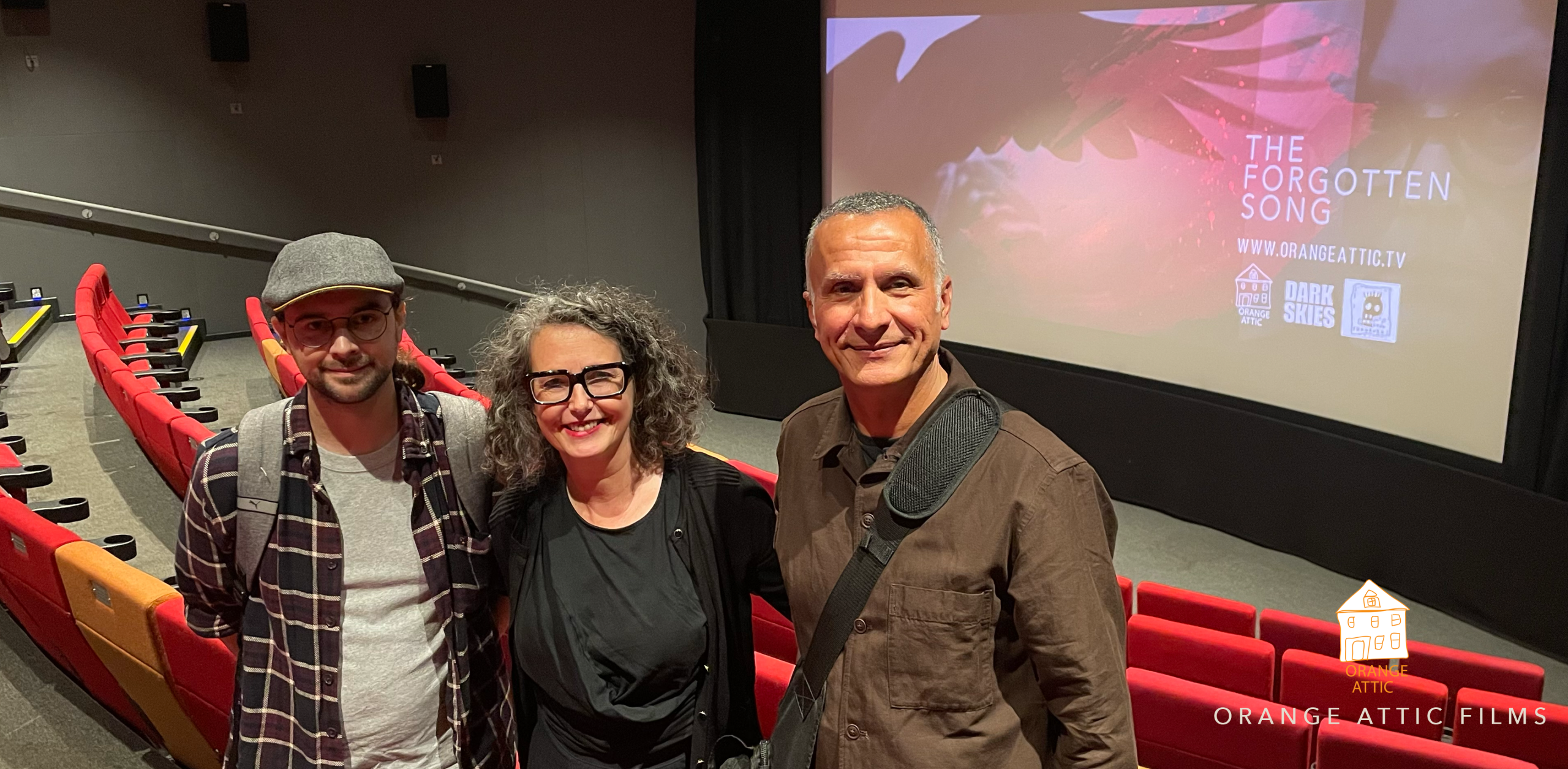
On September the 12th 2026, Dark Skies: Forgotten Song entered that space.

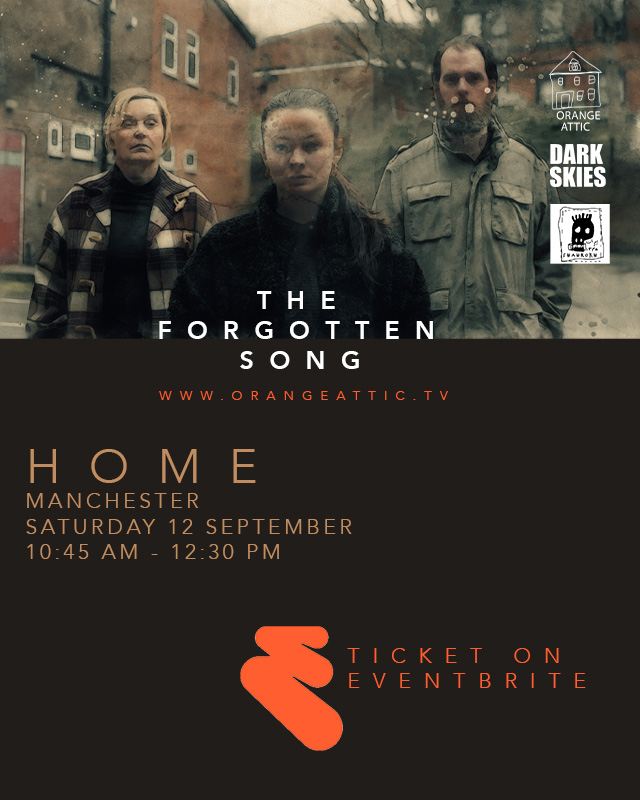
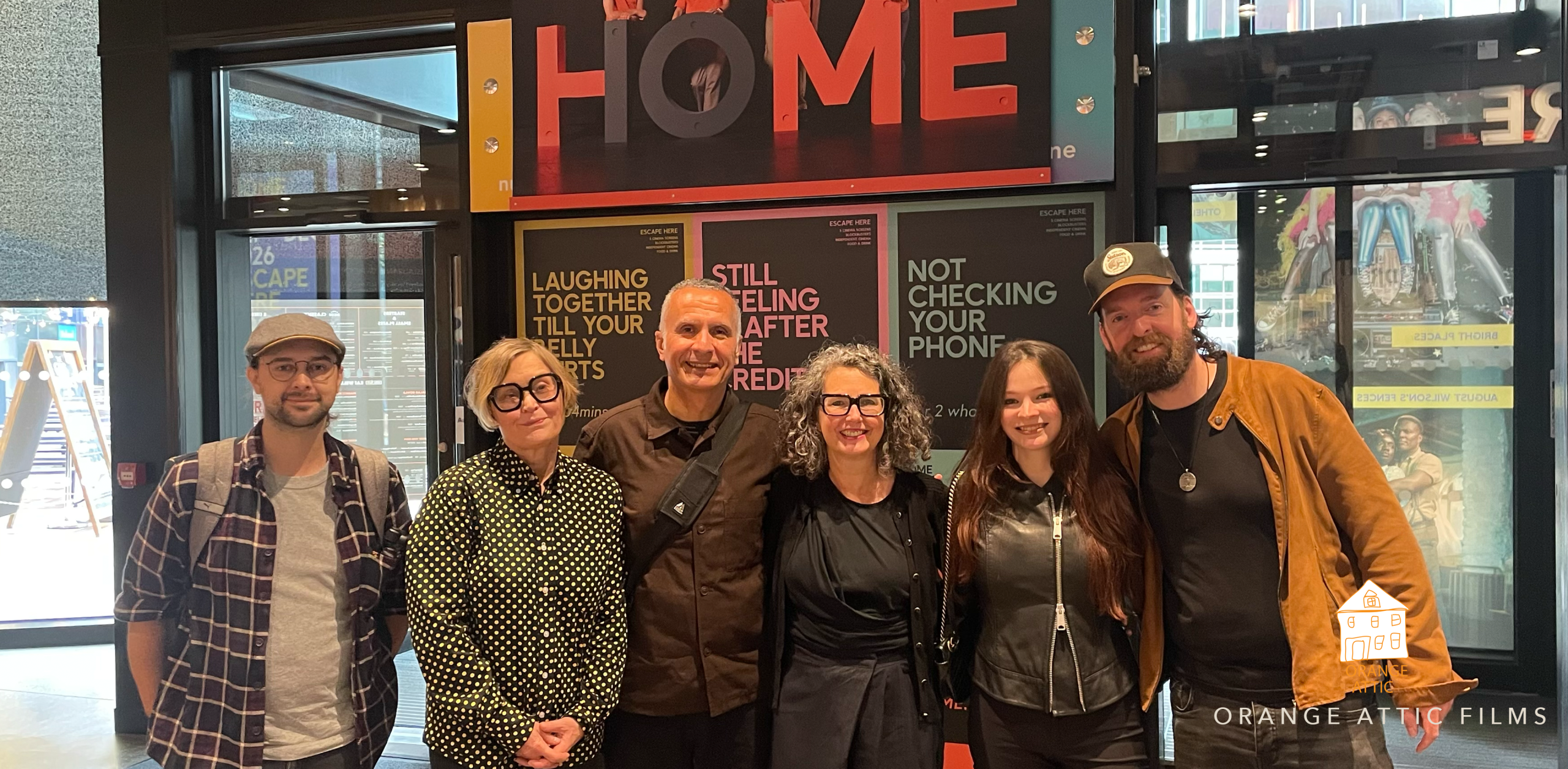
The film was presented privately at HOME Cinema in Manchester, marking an important stage in the development of the Dark Skies series and, more significantly, in the filmmaker’s continuing exploration of experimental narrative cinema.

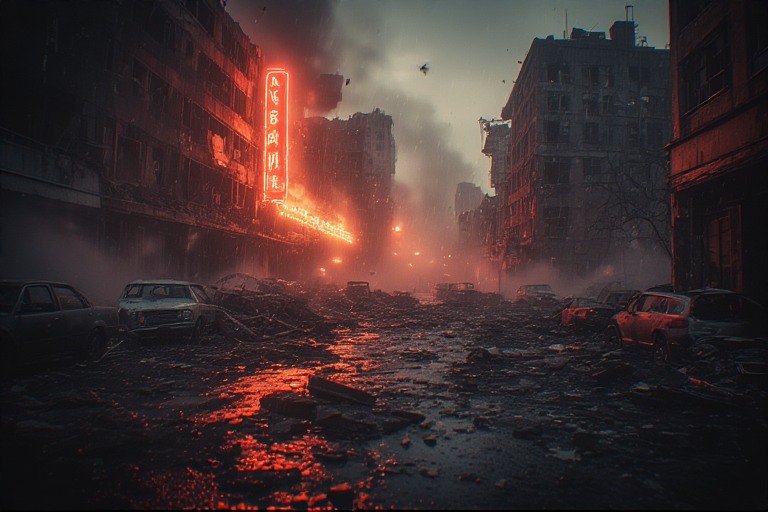
The film began within the familiar territory of the apocalyptic thriller: a city descending into uncertainty, a woman searching for safety, strangers brought together inside an isolated space, and the growing suggestion that something has gone profoundly wrong beyond its walls.

But apocalypse was never intended to be the final destination.

From its earliest conception, the film was more interested in what happens when the apocalypse becomes psychological, when the greatest threat is no longer the world outside, but the possibility that memory, perception and reality can no longer be trusted.

The dance studio became the centre of that idea.

It is a space defined by movement, repetition and the human body; yet as the narrative unfolds, those very qualities begin to undermine any sense of physical certainty. Lena, Isla and Ciaran are confined within the same environment, yet each appears to inhabit a subtly different version of reality. The studio consequently becomes more than a location. It evolves into both a physical refuge and a psychological landscape.

Visually, the film continues the filmmaker’s ongoing fascination with darkness, shadow and restricted palettes. The transitions between sepia, monochrome and colour were not conceived merely as aesthetic devices. Instead, changes in the image become a language of perception subtle shifts intended to destabilise the viewer’s understanding of what is real, remembered or imagined.

The film deliberately moves across genre boundaries.

Apocalypse becomes psychological drama. Psychological drama becomes mystery. Mystery gradually begins to resemble horror.

Rather than providing the audience with a clearly defined route through these transformations, the film embraces uncertainty. Information is withheld. Images return carrying different meanings. Memory becomes unstable. What initially appears to be a straightforward narrative gradually reveals the possibility of another story beneath it.

That ambiguity was particularly significant in the cinema environment.

A film experienced collectively acquires a different relationship with its audience. Silence becomes perceptible. Reactions become part of the rhythm. Moments that may have felt instinctive during production acquire a different weight when encountered by an audience together, in the darkness of a cinema.

At its centre, The Forgotten Song is ultimately concerned with memory, not simply with what is remembered, but with what remains when memory begins to deteriorate.

The title reflects this preoccupation.

A forgotten song is something that has disappeared from conscious memory while continuing to exist somewhere beneath it. The words may be gone. The melody may be incomplete. Its origin may have been lost entirely. Yet something remains: a fragment, a sensation, a trace.

The film operates in much the same way.

It does not attempt to explain everything. Instead, it leaves fragments for the audience to assemble, allowing meaning to emerge through absence as much as through information.

This screening was therefore more than a private presentation of a completed film. It represented another stage in an ongoing creative experiment, an opportunity to discover how Dark Skies: Forgotten Song functions beyond the private world in which it was conceived, written, shot and edited.

For the first time, the film was being experienced independently of the small group who created it.

That transition is significant.

A film begins as an act of authorship, but eventually becomes an act of interpretation. Once the images enter a cinema and are encountered by an audience, their meaning is no longer entirely controlled by the person who made them.

Dark Skies: Forgotten Song has now crossed that threshold.

It no longer exists solely as an idea, a collection of creative decisions, or an experiment within the filmmaker’s own imagination.

It has entered the world.

And from that moment, it begins to belong to everyone who watches it.